Blueberries in Spain: foreign supply marks the transition towards the new Huelva campaign
By: Natalia Rubio Iversen
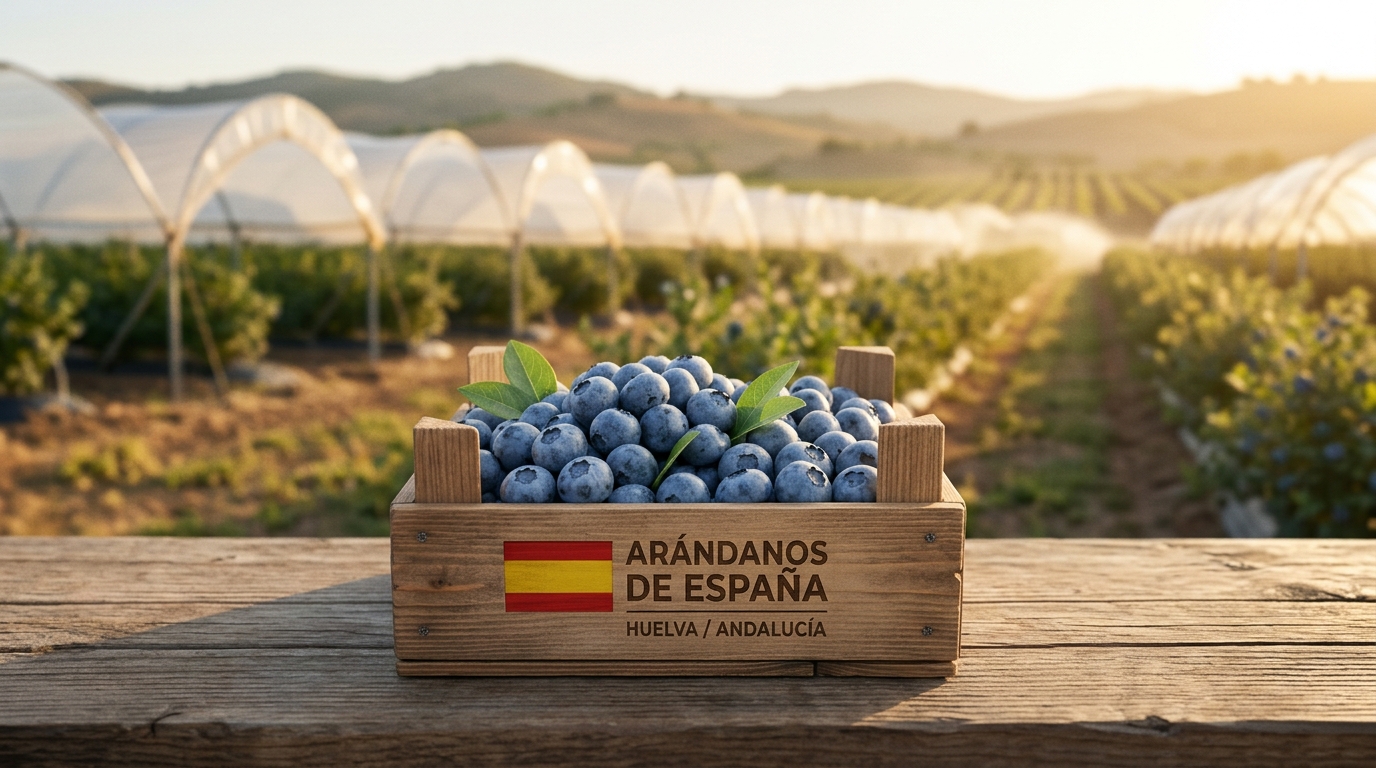
In November, the Spanish market of blueberry It is mainly supplied with imported fruit, while Huelva prepares its first harvests of the 2026/27 season. Peru stands out among the suppliers at this time of year, accompanied by smaller volumes from South Africa and Zimbabwe.
Spanish distributors had already warned in October of reduced availability of Peruvian fruit and high prices. This situation coincides with a decrease in shipments to Europe and with preparations by Spain's main producing region to reintroduce domestic fruit to the market.
External supply changes with the calendar
Peruvian exports of blueberries Exports to Europe reached 59.500 tons between weeks 18 and 43 of 2026, a 15,6% decrease compared to the same period of the previous year, according to Veritrade data published on November 11. Spain is among the main European destination markets, along with the Netherlands and the United Kingdom.
Spanish importers had already indicated in October that Peruvian fruit was arriving in lower quantities than expected, a situation they attributed to high prices. South Africa and Zimbabwe supplement the supply during this period, albeit with smaller volumes.

Imported supplies also respond to an expanding domestic market. According to the IBO Global Blueberry Report 2026, consumption of blueberries In Spain, it registers double-digit annual growth rates, favored by a greater presence of this fruit in supermarkets and its availability throughout the year.
The trade calendar also includes the arrival of Chilean blueberriesAccording to forecasts released in October, the first shipments from this origin would arrive in Spain around mid-December.
Andalusia also imports blueberries
Andalusia, the main producing region of blueberries from SpainIt also relies on external supplies during its own trading season, especially fruit from Morocco.
Between January and June 2026, Andalusian imports reached 17.090 tons, 16% more than in the same period of the previous year. Exports, on the other hand, totaled 68.856 tons, a year-on-year decrease of 4,4%, according to the 2025/26 Campaign Summary for the Red Fruit Sector, prepared by the Price and Market Observatory of the Regional Government of Andalusia.

Morocco accounted for 89% of the value of regional imports during that six-month period. Its peak export activity occurs between February and May, a period that partially coincides with the Spanish harvest and during which both countries contribute to European supply.
Andalusian exports continue to far exceed imports in volume. However, Morocco's share of foreign purchases shows that the region also relies on other sources during its own trading season.
Huelva is preparing for the season with new varieties and early harvests
In the productive sector, Huelva has approximately 4.000 hectares of blueberries and a reference production exceeding 60.000 tons, as reported by the Andalusian Regional Government during the 8th Technical Conference on the Cultivation of Blueberry, held on November 10 in Palos de la Frontera.
The day also addressed advances in soil management, plant health, and crop technology, all relevant aspects for production. blueberries in the province.
Varietal renewal is also modifying the production calendar. Julio Volante, representative of the Official Association of Agricultural Technical Engineers of Western Andalusia in Huelva, highlighted in early November the incorporation of varieties with better yields and commercial characteristics. This is in addition to a trend identified by the IBO Global Blueberry Report 2026The replacement of some traditional varieties with earlier cultivars and the interest of other producers in extending the harvest, thus lengthening the supply period of Spanish blueberry.
The trade forecasts released in October indicated that certain ultra-early harvests would begin at the end of that month, with initially small quantities and a gradual increase throughout December. According to these estimates, the domestic supply would reach more significant volumes towards the end of January.
Over the next few months, Spanish supplies will combine new imports with the progress of the Huelva harvest. The expected addition of Chilean fruit in December and the gradual increase in domestic production will lead to a greater overlap of origins, especially when Morocco enters the peak months of its export season.
Read also:
- Fruit Attraction 2026: Surexport warns that blueberry production is growing faster than consumption
- Cuna de Platero develops blueberry genetics based on the needs of the producer
- Spain, Italy and Portugal are accelerating their blueberry imports
- Europe maintains high demand for blueberries, but quality defines the market.
- Spain exported 2.114 billion euros worth of red fruits, with blueberries contributing a third of the value.
- Spain adds blueberries to the 2026 CPI and updates its consumer basket
next article
ARTÍCULOS RELACIONADOS