Morocco: the new berry giant that now faces the challenge of consolidating its leadership
By: Martin Carrillo
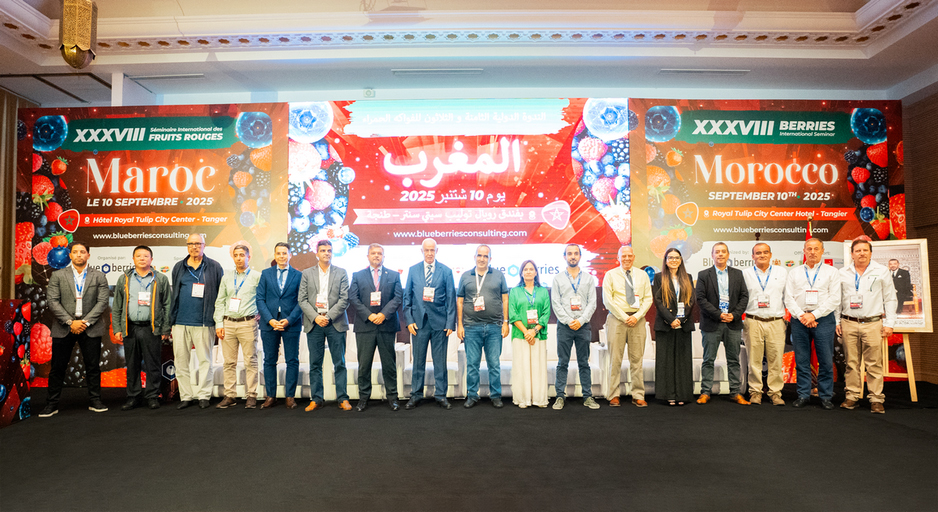
Talking about the global berry industry today no longer means looking only at Chile, Peru, Mexico, or the United States and China. Morocco has firmly established itself among the sector's main players thanks to sustained growth based on international investment, genetic innovation, logistical proximity to Europe, and increasingly technologically advanced agriculture.
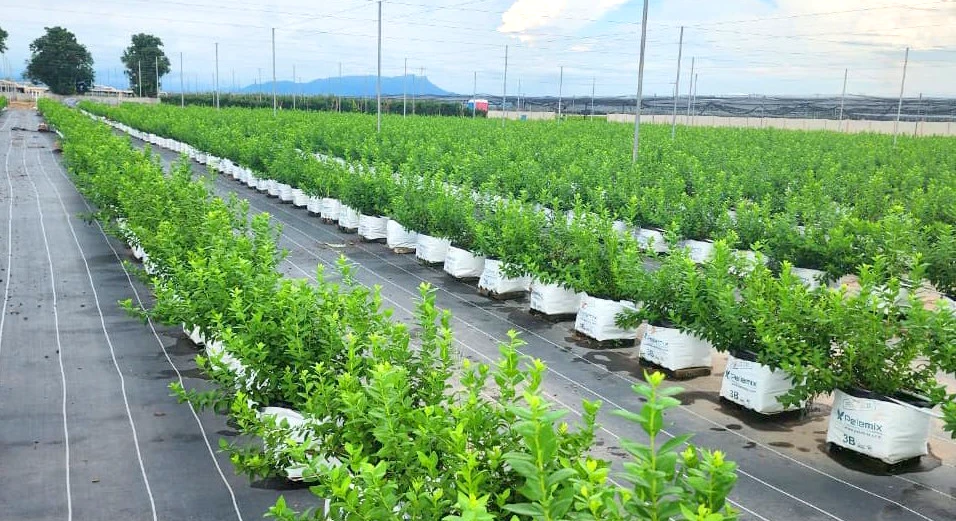
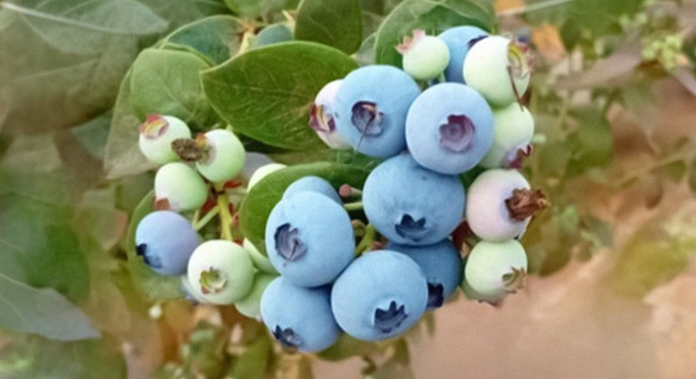
What was just twenty years ago an industry focused mainly on strawberry production, today consists of thousands of hectares dedicated to different berries, with special prominence of blueberries and raspberries, concentrated mainly in the regions of Loukkos, Kenitra and Agadir, although extending to other areas of the country.
The figures reflect this transformation. Morocco's exports are now approaching 100.000 tons of fresh blueberries annually, solidifying its position as Africa's leading exporter and one of the world's main suppliers. Its trading window, between January and May, allows it to supply the European market precisely when the supply from the Southern Hemisphere decreases.

A strategic platform for Europe
Morocco's main competitive advantage continues to be its geographical location close to Europe. While South American fruit requires several weeks of maritime transport to reach European supermarkets, Moroccan berries can be harvested in a single day and be in distribution centers in the UK, France, Germany, or Spain in less than 48 hours.
This advantage has spurred significant international investment, and companies such as Driscoll's, BerryWorld, San Lucar, and Elite Agro Holding, among others, have significantly expanded their operations in the country. The latter recently inaugurated its seventh farm in Morocco, adding another 200 hectares dedicated to blueberry and raspberry production in the Kenitra region. Meanwhile, Elite Agro's investments currently exceed 500 million Emirati dirhams (approximately US$140 million) and have created more than 8.000 jobs, reflecting the confidence in the sector's growth potential.
Water, the main challenge
If there is one issue that is a concern for producers, businesses, and authorities alike today, it is water availability, as Morocco faces one of the most complex water stress scenarios in the Mediterranean. The sustained decrease in rainfall and the increasing pressure on aquifers are forcing a rethink of the production model.
In this scenario, the national strategy Génération Green 2020-2030 has promoted a profound modernization of irrigation through remote monitoring drip systems, moisture sensors and reuse of treated water, seeking to increase efficiency without compromising the competitiveness of the sector.

Diversify to continue growing
Another major challenge is reducing dependence on the European market. Currently, most exports continue to be concentrated in Spain, the United Kingdom, the Netherlands, Germany, and France. However, increasing competition from Peru, Chile, Mexico, and Spain, along with stricter phytosanitary requirements from the European Union, is driving a diversification strategy toward new destinations such as the United Arab Emirates, China, and other Asian markets.
Tangier, meeting point of the world industry
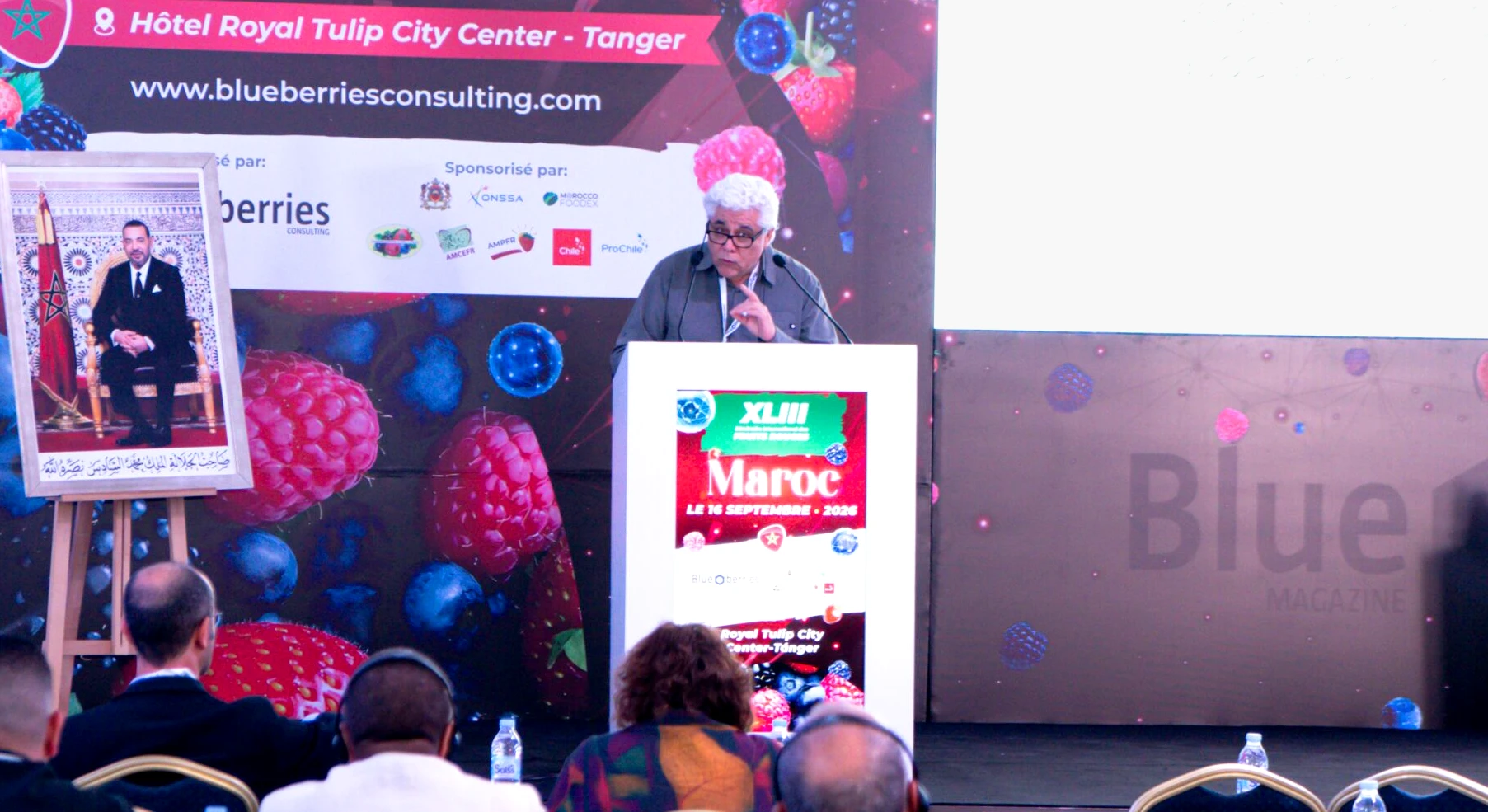
In this scenario of expansion, but also of important challenges, Morocco will once again host one of the most relevant technical meetings of the international industry, namely the XLIII International Seminar on Red Fruits Morocco 2026.
In September, the halls of the Royal Tulip Center Hotel in the city of Tangier will host producers, exporters, researchers, genetic companies, technology providers and specialists from different continents to analyze the present and future of berries in the Mediterranean region.
The international meeting is part of the Blueberry World Tour organized by Blueberries Consulting and will allow participants to see firsthand an industry that has become one of the most interesting growth cases in world agriculture.
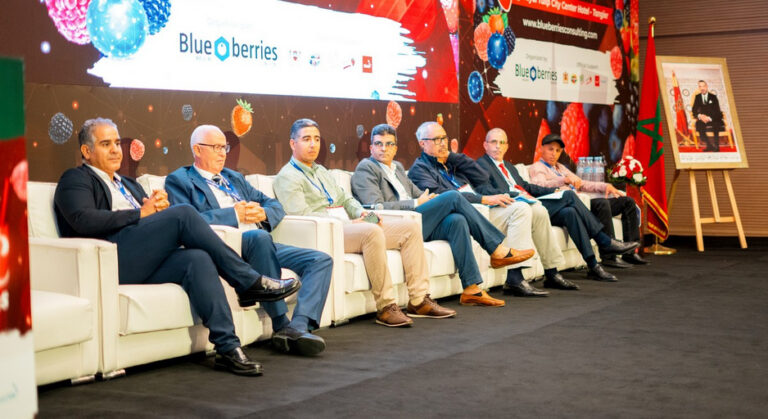

The day will not only be an opportunity to observe the productive advances achieved by Morocco, but also to discuss the challenges that will mark the development of the industry in the coming years, such as its sustainability and strategies to face climate change, as well as the introduction of new varieties and their logistical efficiency, in addition to evaluating its presence in emerging markets and the profitability achieved.
While Morocco has surprised the world over the past decade with its rapid growth, the real challenge begins now, and it must demonstrate that this leadership can be sustained in an increasingly demanding agricultural and commercial landscape. In this context, the upcoming 43rd International Seminar on Red Fruits Morocco 2026, to be held on Wednesday, September 16th at the Royal Tulip City Center Hotel in Tangier, takes on special significance.
The International Technical Tour of Morocco will take place in the Northern Zone of the country, visiting blueberry fields so that producers from different countries can learn firsthand about Morocco's production and technological advancement techniques.
Read also:
- Fruits of Chile celebrates the signing of an agreement between Chile and Morocco to strengthen health cooperation and facilitate food trade
- Morocco: the new competitive frontier of the global blueberry
- Morocco is gaining ground in Spain and is leading among suppliers outside the European Union
- ProChile invites Chilean agricultural suppliers to explore business opportunities in Morocco
- Morocco strengthens its export offering with a new blueberry and raspberry operation
- Chile is betting on Morocco to open up a market for its fresh fruit in North Africa
- International Blueberry Seminars 2026: Blueberries travel through Peru, Chile, Mexico, Morocco and China
ARTÍCULOS RELACIONADOS