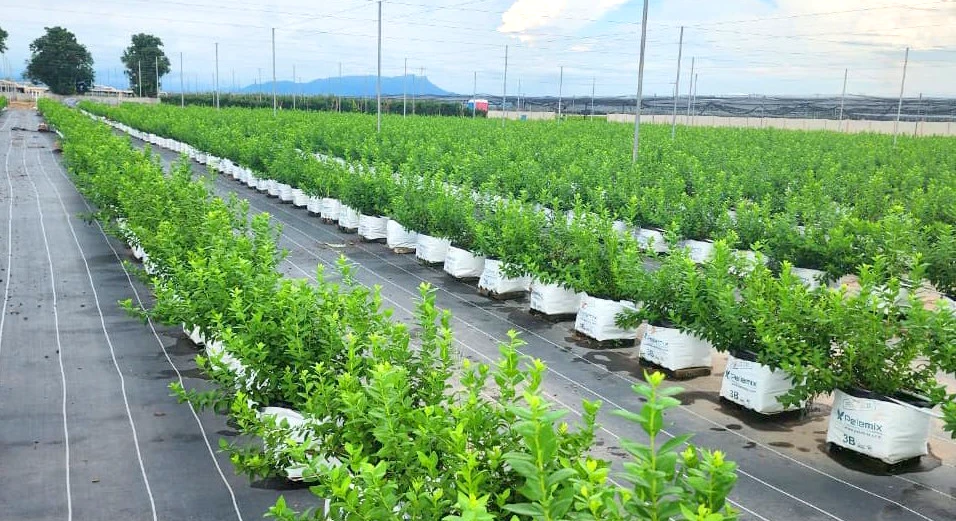
Zimbabwe accelerates its blueberry growth and marks a new export frontier in Africa
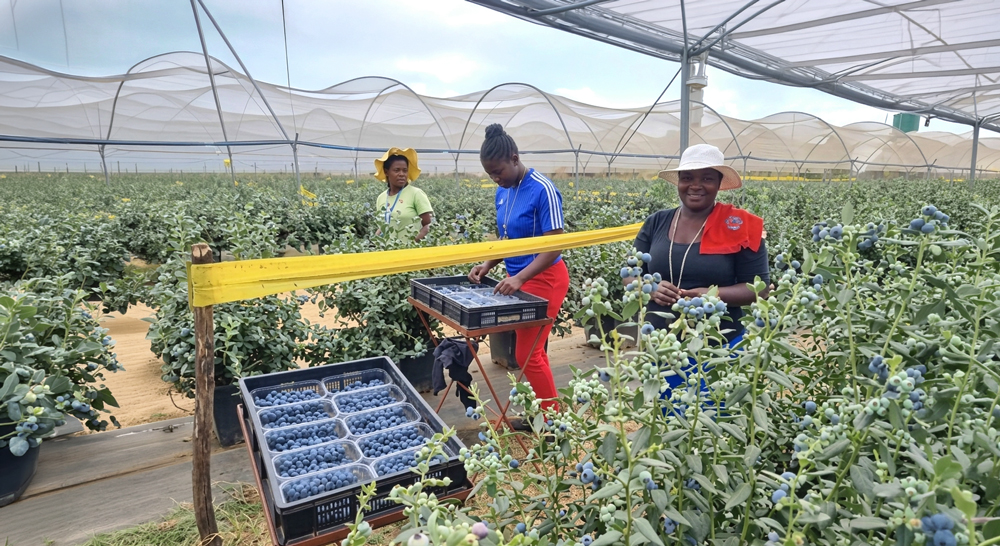
HARARE. The fresh fruit industry in Africa is undergoing a rapid transformation. Exports of tropical fruits and high-value products are growing strongly, driven by increased global demand for healthy foods, year-round fresh fruit, and premium-quality berries.
The continent's tropical fruit exports have more than tripled in the last decade, reflecting a broader shift in African agriculture: from traditional commodity production to higher value horticulture geared towards international markets.
Zimbabwe offers one of the clearest examples of this transformation. Its industry of blueberries, which began commercial export production in 2017, went from being a niche agricultural experiment to becoming one of the fastest-growing horticultural revenue sources in the country.
The scale of the expansion has been significant. Zimbabwe's berry export revenues increased from approximately USD 11 million in 2020 to USD 50,1 million in 2024, representing a 351% increase in four years. Over the same period, export volumes rose from approximately 2.503 tons to 6.240 tons. blueberries They represent the vast majority of the country's berry exports.
Growth has continued. According to the International Organization for the BlueberryZimbabwe exported around 9.500 tons of blueberries in 2025, produced on approximately 650 hectares. By 2026, the planted area is expected to increase to around 850 hectares, with export volumes estimated at approximately 12.000 tons.

From nascent cultivation to export industry
The emergence of this industry is particularly striking considering that blueberries They were virtually absent from Zimbabwe's commercial agricultural landscape just over a decade ago. Trial plantings began in 2008 and commercial exports started in 2017.
Since then, producers have benefited from growing conditions in higher altitude areas, favorable temperatures, a relatively long production window, and proximity to relevant markets in Europe and the Middle East.
The result has been the formation of a high-value export agricultural industry, capable of generating more foreign exchange per hectare than many traditional crops.
Zimbabwean horticulture, in general, is also showing signs of recovery. According to data cited in the report, horticultural exports increased from USD 59,8 million in 2024 to USD 181,7 million in 2025, with blueberries identified as the main contributor to that growth.
A trend that is growing in Africa
The rise of blueberries This trend is not limited to Zimbabwe. In various African countries, producers are incorporating crops such as avocados, berries, mangoes, macadamia nuts, citrus fruits, grapes, and other premium horticultural products in response to increasingly sophisticated international markets.
For investors, the appeal is clear. High-value horticulture activates an extensive economic chain that includes nurseries, irrigation systems, fertilizers, crop protection, cold storage, packaging, transportation, air freight, and port logistics.
Unlike many bulk agricultural products, fresh fruit also opens up opportunities to add value through selection, packaging, processing, and brand development.

Commercial window and new markets
Zimbabwe's geographical location provides an additional advantage. Its blueberry season complements the production cycles of major markets in the Northern Hemisphere, allowing it to supply European consumers during periods when local production is limited.
Germany, the Netherlands, and Spain have become important destinations for Zimbabwean fruit, while the United Kingdom, the Far East, and the United Arab Emirates are also among the relevant markets.
China's opening to Zimbabwean blueberries could further reshape the sector's economy. The country secured a phytosanitary agreement in 2025 that allows its blueberries to enter the market. blueberries to the Chinese market, giving producers potential access to one of the world's largest and fastest-growing premium fruit markets.
Capital, technology and cold chain
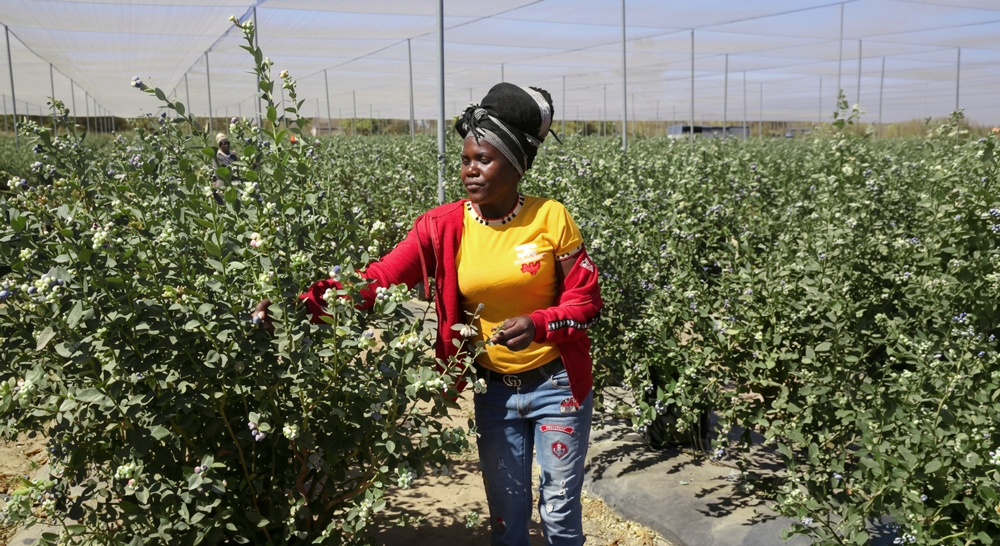
The opportunity, however, demands high levels of investment. Blueberry production requires irrigation, specialized plant material, fertigation systems, protective infrastructure, packing facilities, and reliable cold chain logistics.
Industry estimates have previously placed establishment costs in the tens of thousands of dollars per hectare, making access to long-term agricultural financing a critical factor.
This is one of the main constraints facing Zimbabwe's horticultural revival. Producers have warned that expensive, short-term financing is unsuitable for export-oriented perennial crops. This is compounded by currency regulations and high operating costs, which can reduce the returns available to farmers.
The Horticultural Development Council has requested incentives and better access to patient capital to enable the industry to expand.

From exporting fresh fruit to building an agro-industry
The most important economic question is whether Africa will be able to turn this horticultural expansion into a true agro-industrial complex.
Exporting fresh fruit is just the first step. The greatest opportunity lies in developing the surrounding infrastructure: refrigerated logistics, air freight capacity, specialized packaging, food processing, fruit concentrates, juices, dried fruit, nutraceuticals, agricultural technology, and internationally recognized African brands.
For Zimbabwe, the story of blueberry This demonstrates that the country does not necessarily have to compete in the international market solely through traditional bulk crops. A relatively small but highly productive area, supported by irrigation, technology, capital, and reliable export markets, can generate significant foreign exchange earnings.
The challenge will be to ensure that this new horticultural economy has a broad base and does not remain concentrated in a small number of capital-intensive commercial producers.
To achieve this, it will be necessary to incorporate more local farmers and small producers into export chains through contract farming, long-term financing, technical support, supply aggregation, and shared cold chain infrastructure and packing plants.
Africa's fruit boom, therefore, represents more than just a shift in the continent's crops. It points to a potential restructuring of its agricultural exports: from lower-value commodities to high-value, market-driven, and internationally integrated food companies.
The blueberries Zimbabwe's are perhaps one of the clearest examples of what can happen when Africa's agricultural advantages are combined with capital, technology, and access to global consumers.
Read also:
- Blueberry season in South Africa: good start in the north and uncertainty in the Western Cape
- Morocco: the new berry giant that now faces the challenge of consolidating its leadership
- Chile is betting on Morocco to open up a market for its fresh fruit in North Africa
- South African blueberry growers face increasing global pressure
- China expands tariff-free access to African exports
- China's zero-tariff policy will boost Zimbabwe's blueberry exports
- Blueberries: Africa consolidates the counter-season and logistics strains margins in 2026
- International Blueberry Seminars 2026: Blueberries travel through Peru, Chile, Mexico, Morocco and China
ARTÍCULOS RELACIONADOS