Blueberry season in South Africa: good start in the north and uncertainty in the Western Cape
The blueberry season in South Africa has gotten off to a good start in the northern growing regions. In Limpopo, Mpumalanga, and the Northwest, growers are projecting strong results, supported by solid yields, high-quality fruit, and favorable export prices.
In the Western Cape, where nearly half of the country's blueberries are grown, the outlook is more uncertain. Growers are waiting to assess how a warmer-than-usual winter, flood damage earlier in the year, and potential port disruptions will affect the season. The season in this region will begin in October.
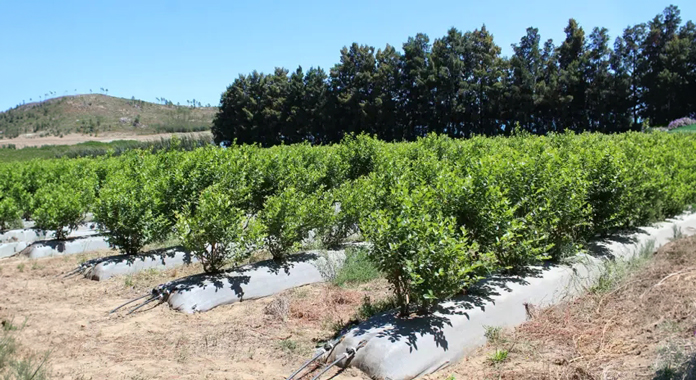
Blueberry production in South Africa continues to expand, with growers increasingly targeting premium export markets. Image: Lindi Botha.
North with good performance and caution in the Western Cape
Nicolas Balcomb, director of Primocane Capital, a company that operates blueberry farms in Mpumalanga and the Western Cape, noted that their operation in Barberton has had an excellent season. However, flood damage reduced their Western Cape crop by approximately 30%.
“We only had one frost event in Barberton this year. The weather is definitely changing, as this winter has been very warm in both Mpumalanga and the Western Cape,” he told Farmer's Weekly.
Elzette Schutte, operations manager at Berries ZA, said that Western Cape growers remain cautiously optimistic despite concerns about the unusually mild winter.

“So far, growers are reporting that the harvest looks good. But we didn’t have the normal amount of chilling units this winter, and it’s still unclear what impact this will have on the crop,” he noted.
Schutte added that the dry winter could also put pressure on the availability of irrigation water later in the season.
Exports with better prices
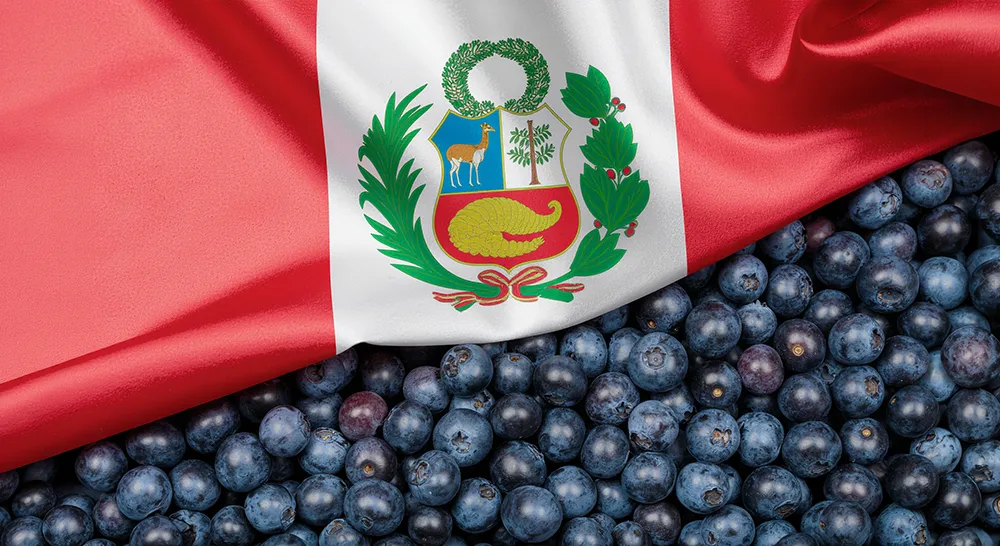
Although production prospects vary across regions, the export outlook remains promising. Balcomb explained that adverse weather conditions have also affected Peru, South Africa's biggest competitor, reducing its expected harvest and supporting international prices.
“During the season, to date, export prices have been between R135/kg and R150/kg. Last year, prices fell to around R90/kg from mid-October, when blueberries from Peru entered the market,” he explained.
South Africa is expected to produce 28.030 tons of blueberries this year, up from 26.000 tons in 2025. The industry anticipates that at least 27.000 tons will meet export standards. By comparison, Peru projects production of around 400.000 tons.
Schutte argued that the rapid expansion of South Africa's blueberry industry began to stabilize, as growers recognize the importance of planting in regions that offer the best market windows.
“Plantations in the north have improved to the point that they now account for half of the planted hectares in South Africa. Since this production is harvested early, before Peru, it represents a more favorable window than that of the Western Cape,” he stated.

Differentiate the fruit, don't compete solely on volume.
Both Schutte and Balcomb agreed that global demand for blueberries continues to grow, but that South Africa will need to increasingly differentiate its fruit instead of competing solely on volume.
“Blueberries aren’t just blueberries. It’s about selecting the right variety based on flavor, freshness, and crispness. South Africa does well in that regard,” Schutte added.
Balcomb noted that producers seeking access to premium export prices should plant suitable genetics in the right regions and target market windows before Peru enters the market in October, or after its largest volumes have passed in January and February.
In the local market, however, returns remain under pressure due to the high volumes of fruit entering South Africa from Zimbabwe.
“But the local market is growing. Much of that growth is driven by retailers like Woolworths and Checkers, which market specific varieties with a good flavor profile,” Balcomb said.
“Consumers are starting to differentiate between different blueberries, so they get a better consumption experience,” he added.

Expanding export opportunities
South African industry is working to reduce its dependence on the European Union by opening new export markets.
Schutte explained that negotiations to access the Chinese market are progressing, although approval for South African cherries must be completed first before attention turns to blueberries.
“We are in the process of conducting the pest risk assessment —PRA—, but it could take between one and five years to complete,” he said.
Access to India appears to be a more promising option, especially since it is a market less supplied by Peru, while China already receives premium Peruvian blueberries.
“The import tariff was negotiated down to 10%, compared to the standard 30% that India applies to South African fruit, and the pest risk assessment has already been signed. But now we are delayed by a reciprocal agreement, in which India requested to supply us with bananas and table grapes.”
“Our government is negotiating with them, so we are awaiting the outcome,” Schutte concluded.
Read also:
- South African blueberry growers face increasing global pressure
- The South African blueberry season is showing strong growth and quality
- Maersk opens new cold storage warehouse in South Africa
- South Africa is making strong progress: the United Kingdom, the Netherlands, and the United Arab Emirates are leading the way.
ARTÍCULOS RELACIONADOS