From growing to competing: Morocco brings together experts to analyze the new challenges of the blueberry
By: Natalia Rubio Iversen
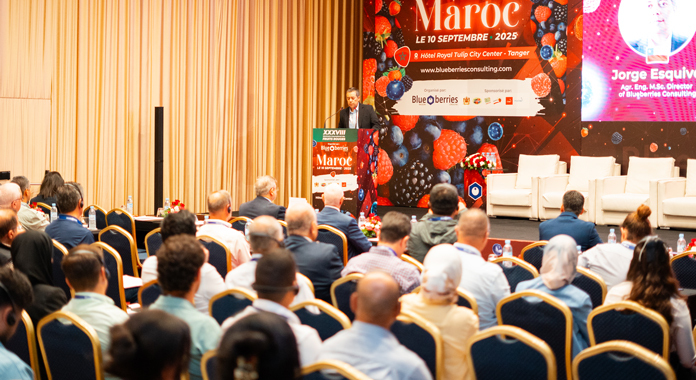
After years of rapid expansion, Morocco now operates on a significant scale in the international market. blueberryThe 2025/26 season closed with 89.236 tons of fresh fruit exported, 6% more than the previous season, but the increase in shipments coincided with production difficulties, greater competition among origins, and labor-related challenges. At this level, volume ceases to be the sole measure of performance: maintaining quality, consistency, and fulfilling commercial agreements are also crucial.
These questions will be at the heart of XLIII International Seminar on Red Fruits Morocco 2026, that Blueberries Consulting will perform September 16 in Tangier. The program connects the experience of producers, researchers and specialists in market, genetics, nutrition, technology, health and post-harvest to analyze an industry that needs to transform its growth into sustainable value.
The event will be opened by representatives of Blueberries Consulting, ORMVA of Loukkos, Mohamed Amouri-President of the Moroccan Federation of Red Fruits Interproberries, the Embassy of Chile in Morocco and ProChile, before moving on to the technical and commercial program.
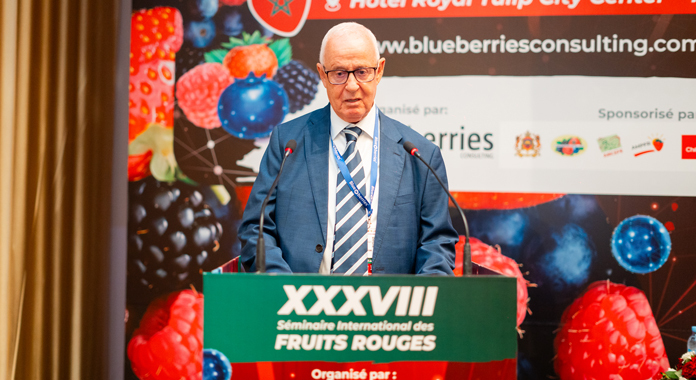
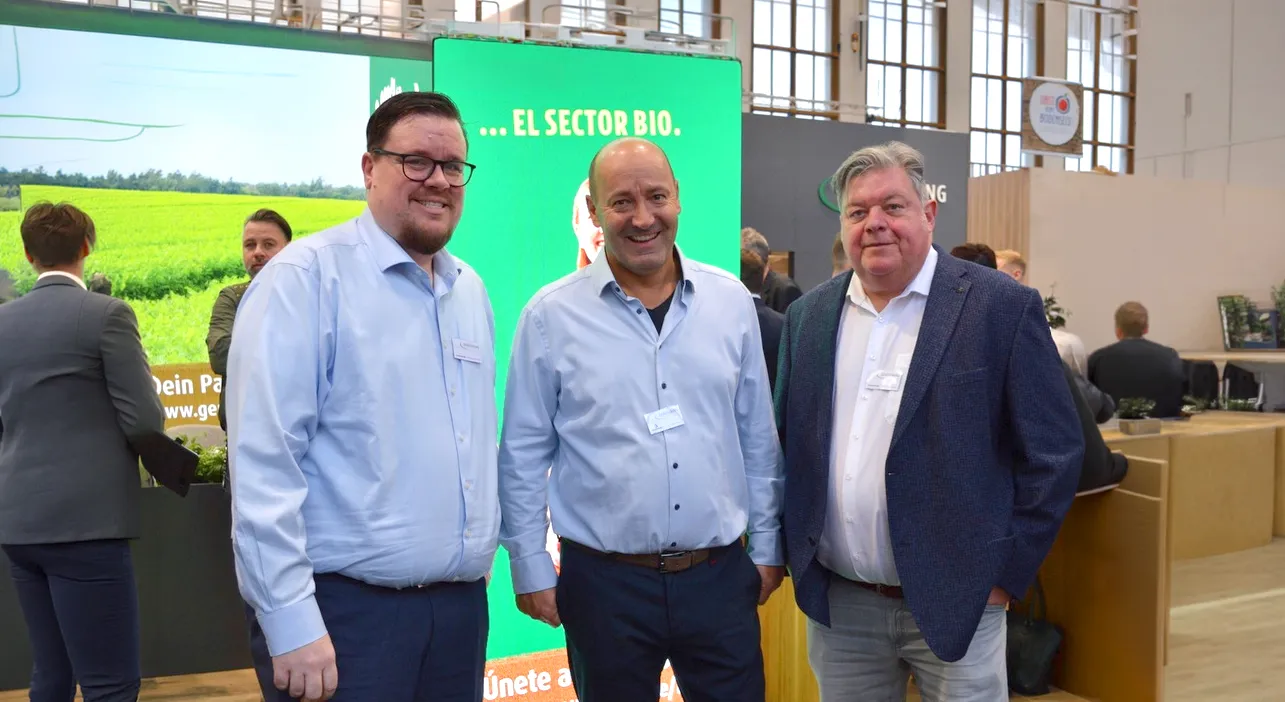
Mohamed Amouri - President of the Moroccan Federation of Red Fruits, Interproberries - Photography: Blueberries Consulting

A larger supply changes the rules of competition
The first look will come from within Moroccan industry itself. Amine Bennani, The president of the Moroccan Red Fruit Producers Association and a member of the Global Farmer Network will analyze the evolution of local production and marketing. His participation will allow the discussion to be framed within the reality of the producers who have witnessed the sector's expansion.
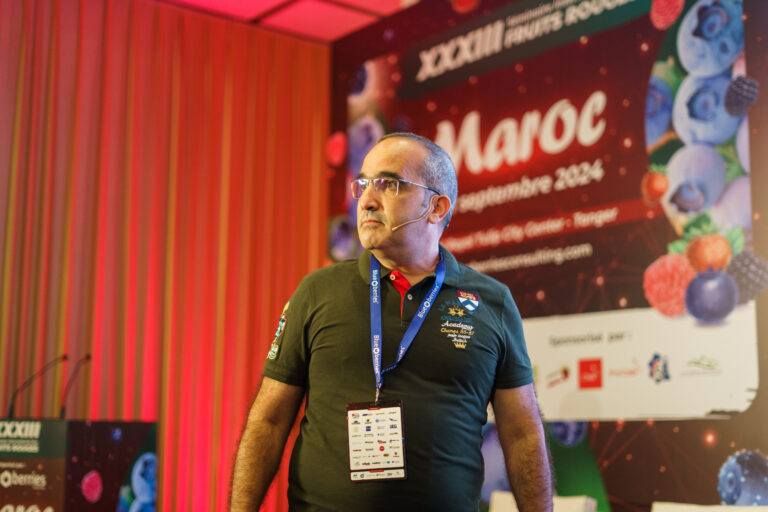
Amine Bennani, President of the Association of Red Fruit Producers of Morocco – XXXIII International Seminar on Red Fruits Morocco 2024
But Morocco's growth is not isolated. Global supply is also increasing, and different origins are competing for space in the same markets. Cindy van Rijswick, global head of crops at Rabobank Research Food & Agribusiness, will broaden the analysis to include trade flows and consumption habits, two variables necessary to understand how the international business of blueberry.
With more fruit available, differentiation becomes more important. Alvaro VillalbaHortifrut's EMEA Business and Genetic Development Director will address the role of genetics in Morocco's competitive advantages. The discussion is not limited to simply producing more: a variety must adapt to the growing conditions and, at the same time, meet the attributes demanded by the market.
Choosing what to produce is only one part of the equation. It's also essential to interpret what's happening during a growing season in a timely manner. From Agronometrics EMEA, Thomas Grandperrin It will present the experience of the Morocco Data Club and the use of real-time information during the 2025/26 season, focusing on how data can support decisions in the face of greater uncertainty.


Growth does not guarantee competitiveness
Increasing acreage, production, or exports does not, in itself, guarantee better results. Some of the value can be lost outside the field: in work organization, quality consistency, operations, or meeting market demands.
This broader perspective will be explored in the panel “Analysis of the Global Soft Fruit Industry: Challenges and Strategies for Competitiveness,” moderated by Amine Bennani. The panel's composition brings together commercial, production, scientific, and regulatory perspectives to examine the same issue from different points in the supply chain.
Philip Symons, EMEA director of North Bay Produce, will provide the sourcing and market perspective; Ibrahim Bouhanch, regional manager of Foodex, the perspective of regulatory compliance in exports and agri-food sustainability; and Otman El Qacemi, Driscoll's Morocco's Social and Environmental Impact Manager will incorporate the labor, social, and environmental challenges associated with the development of the activity.

From another angle, Ahlam Hamim, coordinator of the INRA Small Fruit Research Program, will add applied research to local conditions. Said Zelai, country manager of Agrovision in Morocco, and Loudili Hassan, regional director of ONSSA in the north of the country, will complete the analysis from the production operation and health.
Combining these perspectives will allow us to discuss competitiveness as the result of the entire chain and not solely from the perspective of yield per hectare.

Quality is built in before it reaches the market
Part of that competitive advantage is determined long before the fruit reaches the buyer. Nutrition and water influence the plant's functioning, while stress and decisions made before harvest can ultimately affect the fruit's quality and shelf life.
Jorge Esquivel, director of Blueberries Consulting and international advisor, will address the relationships between nutrients and the production strategies involved in modern production of blueberries. The approach seeks to understand nutrition as a system of interactions and not as an isolated sum of inputs.
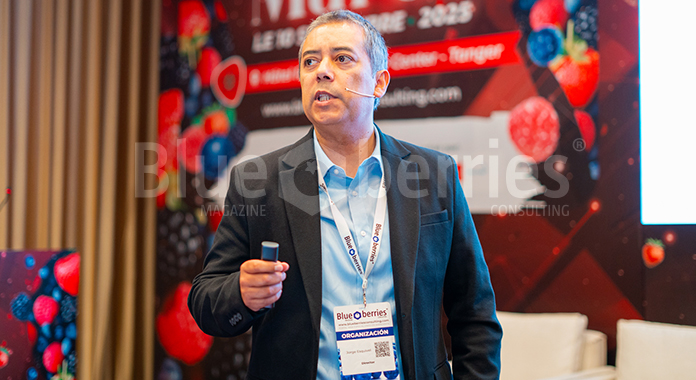
Jorge Esquivel, director of Blueberries Consulting and international consultant
Water will be the next link in that conversation. Moisés Cohen AmarA specialist in water and soil management and co-founder of Morph2ola and AgViewer, will speak about precision water management. In a country where water availability limits agricultural expansion, having better tools to decide when and how much to irrigate has direct productive applications.
From the plant, the analysis will move towards the fruit. Daniel Manríquez It will address the importance of the cuticle and its relationship to the mitigation of biotic and abiotic stress in blueberries and other red fruits. The cuticle plays an important role in protecting the fruit and in its response to conditions that can affect its quality.
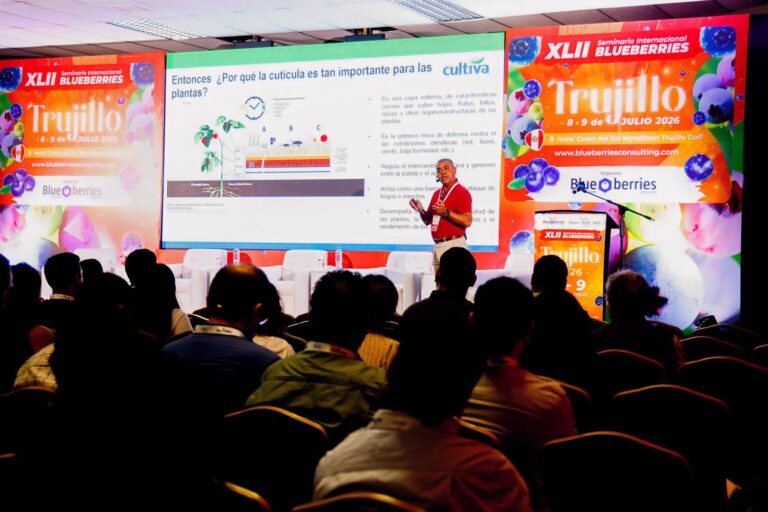
Daniel Manríquez International Seminar Blueberries Trujillo 2026 © Blueberries Consulting
The sequence will extend to post-harvest with Reinaldo Campos-Vargas, from the Faculty of Agronomic Sciences of the University of Chile, who will analyze the use of pre-harvest growth regulators to optimize quality and prolong post-harvest life of the blueberryThe topic focuses on a relationship that is especially relevant for fruit destined for distant markets: part of its post-harvest behavior begins to be defined while it is still on the plant.
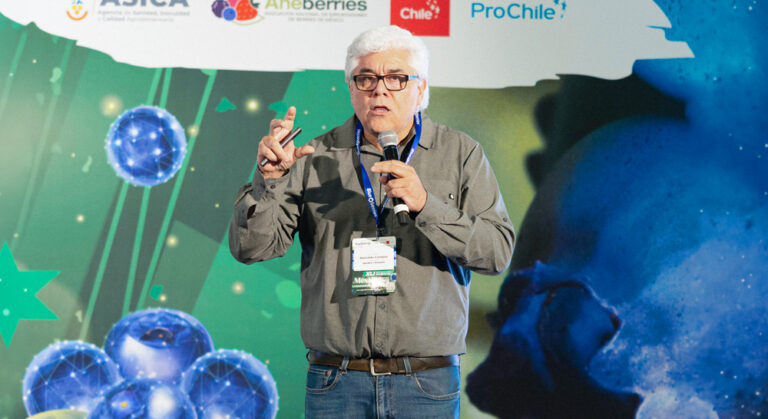
Reinaldo Campos at the XLI International Blueberries Seminar Mexico 2026 © Blueberries Consulting
The search for efficiency will also extend to the use of what is left out of the fresh fruit circuit. Luis Nunes, from HST-Service Providers, and Mohamed Amouri, president of Interproberries, will analyze alternatives to valorize by-products of the berries and generate new uses from these materials.

The variety of topics reflects a concrete reality: in an industry with increased supply, none of these variables operate in isolation. Market, genetics, information, resources, research, health, and quality all converge on the ability to deliver fruit that finds a place and value at its destination.
For Morocco, which has already achieved a significant export scale, integrating these variables will be part of the next stage. These questions will bring together producers, companies, researchers, and specialists from the international industry next [date/meeting/event]. September 16th in Tangier.
Check out the summary of the XXXVIII International Seminar Berries Morocco 2025 on our Blueberries TV YouTube channel.
Read also:
- Morocco strengthens its position in the global blueberry market with increased production and export volumes
- Morocco Data Club: data to anticipate the blueberry market
- Morocco becomes Norway's top supplier of berries
- Morocco: the new berry giant that now faces the challenge of consolidating its leadership
- Tangier will be the meeting point for a rapidly expanding berry industry
- Fruits of Chile celebrates the signing of an agreement between Chile and Morocco to strengthen health cooperation and facilitate food trade
- ProChile invites Chilean agricultural suppliers to explore business opportunities in Morocco
- Chile is betting on Morocco to open up a market for its fresh fruit in North Africa
- International Blueberry Seminars 2026: Blueberries travel through Peru, Chile, Mexico, Morocco and China
Previous article
Egypt gains scale in blueberries and accelerates its exportsARTÍCULOS RELACIONADOS