Morocco: from competitor in berries to market for Chilean agricultural technology
By: Martin Carrillo
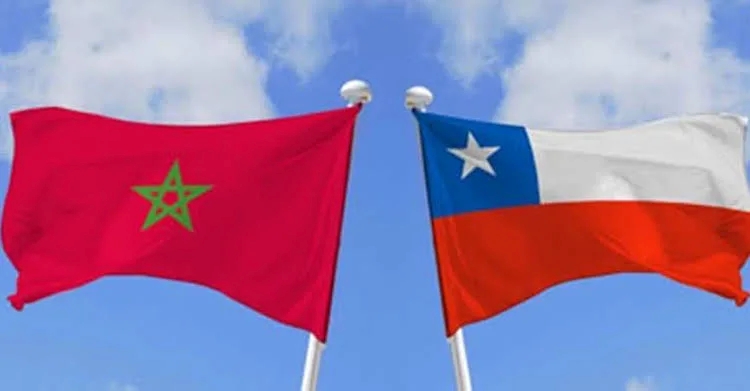
Morocco is strengthening its presence in the international berry market, leveraging its proximity to Europe, its trade windows, and the introduction of new genetics. For Chile, this expansion represents increased competition in certain markets, but it also opens up opportunities for companies capable of offering technology, services, and specialized knowledge.
Both dimensions were present at the XLIII International Seminar on Red Fruits, held in Tangier, where producers, specialists, institutions and companies analyzed the evolution of the Moroccan industry and the opportunities for commercial cooperation between both countries.

Advantages that strengthen the Moroccan offer
In his presentation on Morocco in the global market, Álvaro Villalba, EMEA Business and Genetic Development Director at Hortifrut, linked competitiveness to the market window, genetics, delivery times, and fruit characteristics. Morocco's proximity to Europe allows it to operate with shorter logistics times than more distant suppliers, an advantage that becomes increasingly significant as the presence of other origins grows during the season.
Villalba also placed genetics within that strategy. The varietal choice is linked to the destination market, the time of arrival, and attributes such as size, firmness, flavor, and shelf life. Geographical proximity can favor freshness, but competition based on value demands that this advantage be accompanied by fruit capable of meeting higher commercial standards.
For Chile, located thousands of kilometers from its main markets, this evolution reinforces the importance of variables such as genetics, condition, and logistics. Morocco does not compete solely on volume: its position relative to Europe allows it to combine production, speed of delivery, and varietal renewal.

Growth opens up markets for Chilean suppliers
The expansion of Moroccan industry also generates demand for solutions related to production, technology, equipment, and specialized services. This was another dimension of the Chile-Morocco relationship that was present during the seminar.
ProChile participated in the event alongside Chilean companies interested in presenting their offerings and establishing contacts with local industry stakeholders. The objective is internationalization that doesn't rely solely on fruit exports, but rather incorporates capabilities developed over decades of agriculture geared towards foreign markets.
The needs that accompany productive growth —resource efficiency, precision agriculture, water management, genetics, quality and production technologies— open up areas in which Chilean suppliers can explore commercial opportunities.
In this case, the growth of a competitor also expands a potential market for agricultural solutions.

Morocco as a platform for new markets
During the opening ceremony, Alberto Rodríguez, Chile's ambassador to Morocco, highlighted the country's strategic location as a crossroads between Africa, Europe, and the Middle East, and expressed interest in strengthening bilateral economic relations. The seminar program also included Said Bahajin, trade representative for ProChile, as part of the Chilean institutional delegation.
The relationship thus offers a dimension that goes beyond direct trade between the two countries. For Chilean companies, developing ties with Moroccan industry can also facilitate market knowledge and access to trade networks in a region where Morocco already maintains production and logistical connections.
The extent of this opportunity will now depend on how many of the contacts made in Tangier can be translated into concrete projects, services, and business relationships. For Chile, Morocco's advance in berries means greater competition in fruit, but also a market where its agricultural expertise can be transformed into an exportable offering.
Check out the interview with Said Bahajin from PrcChile during the XLIII International Seminar on Red Fruits, 2026 made in Tangier in our Blueberries TV YouTube channel
Read also:
- Morocco has an advantage in blueberries, but must protect its position
- Berry by-products: from fiber and polyphenols to new products
- Varieties for different windows: the technical tour visits fields in Morocco
- The quality of berries in Morocco is also defined after the harvest
- Tangier focuses on the blueberry challenge: growing without putting pressure on the market
- From production to packing: the Tangier trade fair area brings together solutions for berries
- Morocco begins the new agricultural season with less moisture and pressure on water reserves
- Morocco could produce nearly 70% more blueberries by 2029
next article
ARTÍCULOS RELACIONADOS