Ricardo Márquez: “Varietation replacement applies to all blueberry markets”
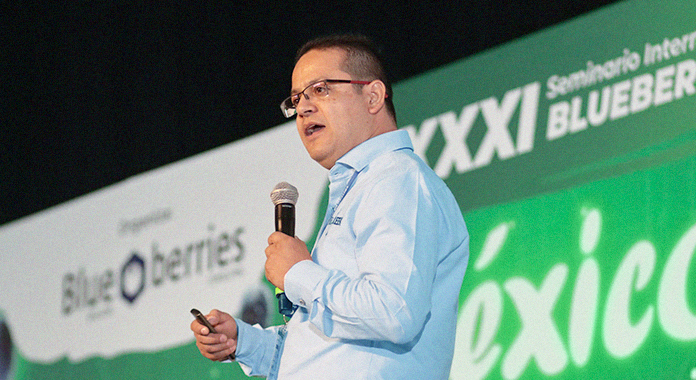
To Ricardo Márquez, commercial manager of Fall Creek MexicoIf there is a trend capable of transforming the industry of blueberry Before 2035, that's the varietal replacement. Although it's a global phenomenon, it doesn't respond to a single need: each producing region is looking for a different answer to its own competitiveness challenges in the new genetics.
From this perspective, the conversation allows us to observe how genetic improvement programs are progressing towards materials capable of combining fruit quality, adaptation to different production conditions, and attributes that enhance the consumer experience.
In an interview with Blueberries ConsultingMárquez addresses the pace of varietal replacement in different producing countries, the characteristics that genetic programs are prioritizing, and the margin for innovation that still exists in the blueberry compared to other crops.


If I had to bet on one trend that will transform the blueberry industry before 2035, would it be varietal replacement?
It's difficult to choose just one trend, especially if we look at the blueberry globally. But there is one phenomenon that applies to all markets, either because it is already happening or because it will happen soon: varietal replacement.
In the United States and Canada, there is an urgent need to incorporate new genetics to remain competitive in their markets. Mexico is already shifting towards more resilient varieties, capable of adapting to more demanding climatic conditions and high temperatures, with improved size, yields, and flavor.
In Peru, the main focus is on firmer varieties with better shelf life and the ability to flatten the yield curve. In Chile, as in the United States and Canada, varietal change was urgent. The industry is now becoming convinced and is gradually incorporating new genetics that can offer varieties that travel better and are more productive.
What changes when genetic improvement programs begin to accelerate their results?
Genetic programs are entering an acceleration phase. They are beginning to offer more varietal options in less time, and thanks to this, there are now more genetic choices available. Various producing countries and consumer markets are starting to embrace and demand them.
In the long term, the focus remains on fruit quality. This will help achieve a more consistent supply and consolidate consumption, which still has room to grow.
When we talk about quality, we're talking about firmness, flavor—with a good balance between acidity and sweetness—, size and appearance, including the presence of bloom.

Ricardo Márquez – Commercial Manager, Fall Creek Mexico © Blueberries Consulting

Besides fruit quality, what agronomic requirements will future varieties have to meet?
In addition to quality attributes, the new varieties of blueberries They must not neglect agronomic performance. They will need to be more resilient to climate change, have genetic flexibility to adapt better to different regions, and show improved levels of tolerance to pests and diseases.
If blueberry genetics is still young, where might varietal differentiation go from here?
The genetics of blueberry It is relatively young compared to other crops, so the best is yet to come.
We will undoubtedly see specialties, such as super jumbo blueberries, fruits with exterior colors other than the classic dark blue, and interiors that offer more alternatives than white.
New flavor experiences could also emerge, combining the profile of blueberry with notes of other fruits. Such developments already exist in earlier stages. Finally, we could also see more aromatic fruits, which, along with special flavors, deliver a distinct experience for the consumer.
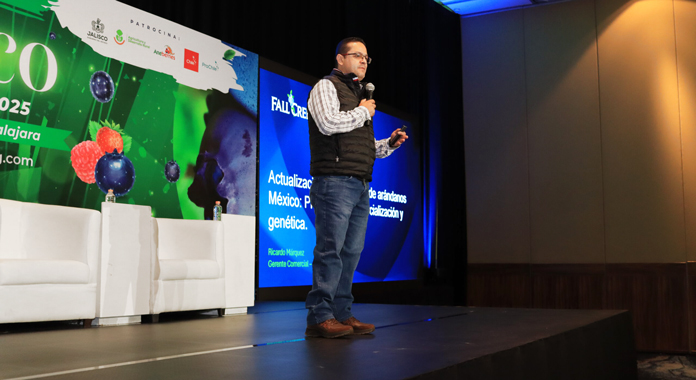
Ricardo Márquez – Commercial Manager, Fall Creek Mexico © Blueberries Consulting
A young genetic makeup, with room to continue surprising
For Márquez, the genetics of blueberry It still has a long way to go. Compared to other crops, it's an industry in an early stage of development, where significant advances in adaptation, productivity, shelf life, flavor, color, and aroma are still possible.
This path, however, will not be the same for all countries. Each origin will seek in the new genetics an answer to its own needs: fruit that travels better, firmer varieties, more productive materials, adaptation to heat, or attributes that allow them to differentiate themselves in the eyes of the consumer.
In this view, varietal replacement doesn't appear to be a passing trend. It's part of the adjustment the industry is making to compete better, with varieties that not only perform well in the field, but also reach the market successfully and provide a positive consumer experience.
Read also
- Global demand exceeds supply in blueberries and it is necessary to double its growth
- Blueberry varieties in Mexico: choosing well will be key to competing better
- Mexican blueberry industry accelerates varietal replacement and seeks to consolidate its position in the U.S.
- Ricardo Márquez, commercial manager of Fall Creek Mexico: “The industry has consolidated and is moving forward with major projects”
- International Blueberry Seminars 2026: Blueberries travel through Peru, Chile, Mexico, Morocco and China
ARTÍCULOS RELACIONADOS